
Stop Waiting for Perfect Subjects!
"I don't have anything interesting to photograph."
I hear this all the time from photographers who want to practice but feel stuck. They think they need exotic locations, professional models, or expensive setups to create compelling images. They scroll through Instagram, see photos from amazing destinations or perfectly styled scenes, and think, "Well, I can't compete with that."
But here's what I wish someone had told me when I was starting out: the most extraordinary photos often come from the most ordinary subjects.
You don't need to travel the world or wait for special occasions to create images you love. In fact, some of my favorite photos – and the ones that taught me the most about photography – were taken of completely mundane objects sitting right in my house.
When I Photographed Everything (And I Mean Everything)
When I first got serious about photography, I had a problem: I wanted to practice every day, but I didn't always have access to "interesting" subjects. So I made a decision that changed everything about how I see the world.
I started photographing everything around my house.
And I mean everything.
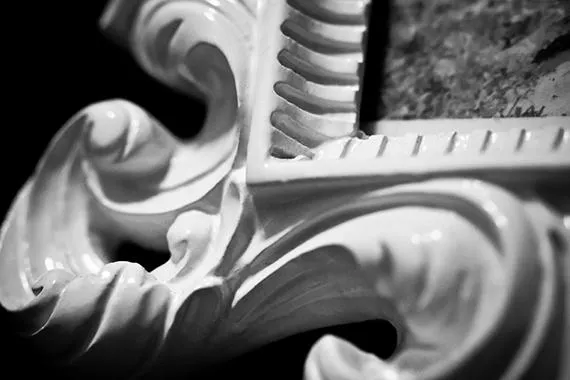
I shot a pile of folded jeans, finding angles that made the fabric textures and shadows interesting. I photographed a fall decorative pumpkin under sparkling string lights, creating beautiful bokeh that made something simple look magical. I got up close to the corner of an ornate picture frame, focusing on the intricate details most people walk past every day.
I sliced an orange and captured the incredible natural geometry – each section of pulp, the way light played through the translucent flesh, the delicate patterns that nature creates. I photographed the inner lines of a mushroom, discovering a whole world of texture and form I'd never noticed before.
It was the most fun I'd ever had with photography. Every ordinary object became a creative challenge: How could I make this compelling? What angle would show it in a new way? How could light transform something mundane into something beautiful?
And you know what? Those photos were incredible. Not because the subjects were special, but because I approached them with intention, creativity, and curiosity.
Why We Think Ordinary Isn't Worth Photographing
Before we talk about how to make ordinary extraordinary, let's address the elephant in the room: why do we feel like everyday objects aren't worthy subjects?
Social media has warped our expectations. We're constantly seeing curated feeds full of exotic locations, professional styling, and picture-perfect moments. It's easy to think that's the standard for what makes a "good" photo.
We've confused subject matter with good photography. A technically perfect photo of the Eiffel Tower taken with poor composition and harsh lighting isn't automatically better than a beautifully composed, well-lit photo of your coffee mug.
We undervalue what's familiar to us. The things we see every day become invisible to us. But what's ordinary to you might be fascinating to someone else. Your perspective, your angle, your way of seeing – that's what makes a photo special.
We think we need permission to photograph "unimportant" things. Somewhere along the way, we started believing that photography should only document special occasions or impressive subjects. But photography is about seeing, not just recording.
Permission Granted: Your Ordinary is Extraordinary
Here's your official permission: you are allowed to photograph anything that catches your eye, no matter how mundane it seems.
That interesting shadow pattern on your wall? Photograph it.
The way morning light hits your coffee cup? Photograph it.
The texture of your favorite sweater? Photograph it.
The way rain drops look on your window? Photograph it.
You don't need to justify why something is worth photographing. If it speaks to you, if you notice something about the light or the composition or the moment – that's reason enough.
How to Make Ordinary Objects Extraordinary
Now, let's talk about the practical side. How do you take something mundane and turn it into a compelling photograph?
Change Your Perspective
Get close. Really close. Most people photograph objects from eye level, standing a few feet away. Try macro photography – get so close you can see textures you never noticed before. That orange slice becomes a study in natural geometry. The corner of a book becomes an exploration of shadows and lines.
Change your angle. Don't just shoot from standing height. Get down low. Shoot from above. Find unusual angles that make familiar objects look completely different.
Look for patterns and details. Ordinary objects are full of interesting patterns, textures, and details we usually overlook. The spiral of a seashell, the veins in a leaf, the way fabric folds – there's beauty in the details.
Use Light Intentionally
Find interesting light. This goes back to what we talked about before – light transforms everything. That boring pile of books becomes dramatic with strong side lighting. String lights can make anything look magical.
Create shadows. Shadows add depth, mystery, and visual interest. Use window light, lamps, or even your phone's flashlight to create interesting shadow patterns.
Play with backlighting. Try placing translucent objects (like leaves, fabric, or that orange slice) between your camera and a light source. The results can be stunning.
Focus on Composition
Use the rule of thirds. Even when photographing a simple object, thoughtful composition makes all the difference.
Include negative space. Don't feel like you need to fill the entire frame. Sometimes the empty space around your subject is just as important as the subject itself.
Look for leading lines. Books stacked at an angle, the edge of a table, the handle of a mug – these can all create visual flow in your image.
Ask Yourself: What's the Story?
What emotion are you trying to capture? Even ordinary objects can convey mood. Soft lighting and gentle shadows might create a peaceful, contemplative feeling. Strong contrasts and dramatic angles might feel more energetic or mysterious.
What details matter most? Focus on what makes this particular object or moment interesting to you. Is it the texture? The color? The way light interacts with it?
What would you want someone else to notice? This helps you think about composition and focus. What would make someone else stop and really look at this ordinary thing?
The Unexpected Benefits of Photographing Ordinary Things
When you start photographing everyday objects, something magical happens:
You become a better photographer faster. You're practicing composition, lighting, and technical skills without the pressure of capturing a once-in-a-lifetime moment.
You start seeing the world differently. You'll begin noticing light, shadows, textures, and moments you used to walk right past.
You always have something to photograph. No more waiting for special occasions or perfect conditions. Your practice opportunities are literally everywhere.
You develop your unique style. When you can't rely on an impressive subject to carry your photo, you have to develop your technical and creative skills. This is where your personal style emerges.
You build confidence. Every successful photo of an ordinary object proves that good photography isn't about having access to amazing subjects – it's about your skills and vision.
Start Where You Are, With What You Have
You don't need to wait for the perfect opportunity to start practicing photography. Look around you right now. What's catching your eye? What's the light doing? What textures, patterns, or details have you never really noticed before?
Your kitchen counter, your bookshelf, the way afternoon light comes through your bedroom window – these aren't "settling" for lesser subjects. These are opportunities to practice seeing like a photographer.
Some of the most compelling photos I've ever seen were of completely ordinary things: a single egg, raindrops on a car window, the shadow of a houseplant on a wall. What made them extraordinary wasn't the subject – it was the photographer's ability to see something special in something mundane.
Your Assignment (If You Choose to Accept It)
This week, I challenge you to photograph five completely ordinary objects in your immediate environment. Don't leave your house. Don't style anything. Just pick five things you see every day and challenge yourself to make them interesting.
Try different angles. Play with light. Get closer than you think you should. Focus on details. Ask yourself what story each object might tell.
You might be surprised by what you discover. That pile of folded laundry might become a study in texture and form. Your houseplant might create beautiful shadow patterns you've never noticed. Your morning coffee setup might become a perfectly composed still life.
The World is Full of Photographs
Here's what I've learned from 13 years of photography: the world is absolutely full of incredible photographs. They're not all hiding in exotic locations or special events. They're in your living room, your backyard, your daily routine.
The difference between photographers who see these opportunities and those who don't isn't access to better subjects. It's the willingness to slow down, pay attention, and find beauty in the everyday.
You have permission to photograph anything that interests you, moves you, or makes you want to pick up your camera. Your ordinary world is more photogenic than you think – you just need to start seeing it with a photographer's eye.
Want more tips for making the most of what you have? Download my free guide "Shoot Like A Pro" for simple techniques that work with any camera and any subject.
